Unlocking Comfort: Saddle ‘Softness
When it comes to choosing the right saddle, finding the proper size is just the beginning. Identifying the saddle’s proper softness—one with the level of flex and compression that matches the rider’s physics and riding style—is equally important. This less understood saddle characteristic, with two key components—flex and compression—will ultimately determine the riding experience. Let’s dive in and decode the secrets of saddle comfort.
Understanding Softness: Flex vs. Compression
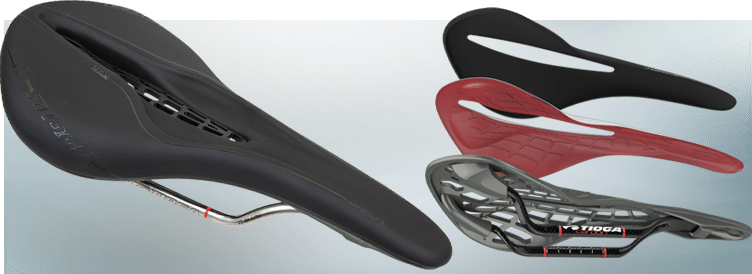
The saddle’s softness (or hardness) is often thought of as a singular characteristic. In reality, there are two dimensions to the saddle’s softness: flex and compression. While there are similarities and interrelationships between the two, each has distinct characteristics and knowing the difference between them will determine the right saddle.
Think of Flex as the bounce in your step. It’s how the entire saddle bows like a spring board (there are more subtle forms of Flex, which we’ll cover in later installments). Want to test it? Simply press down on the saddle’s center with your palm. The more give you feel, the more Flex it has.
Now, let’s turn to compression. Compression is how the saddle surface molds to the body’s unique contours when seated. Imagine sinking into a plush sofa; that’s the feeling Compression brings. Test it out by applying thumb pressure at different spots on the saddle surface, being mindful that some areas may be firmer than others depending on the saddle’s design.
Signs of too little Flex:
- Too much bounce off the saddle riding over bumps.
- The saddle gets in the way of you moving your hips and legs when pedaling.
- The saddle feels stiff from nose to tail with little bowing, making you slide fore to aft on the saddle keeping you from finding the best stable spot to sit on.
Signs of too much Flex:
- The saddle bows and often bottoms out on the seat post.
- Excessively bobbles up and down with your pedaling motion and slow to come back to the original shape.
- The saddle bows too much with your weight (your body sinks into it) and does not let you move fore to aft as smoothly as you want.
Signs of too little Compression:
- As soon as you sit on the saddle, the surface feels too hard.
- You feel uncomfortable localized pressure (usually around the Ischium or the perineal).
Signs of too much Compression:
- The saddle surface feels too soft as soon as you sit on it, feeling like your body is sinking too far into it.
- As you pedal, it feels like your leg is pressing against the saddle surface and taking up some of your pedaling energy without any rebounding.
There’s a growing consensus in recent years that excessive saddle ‘softness’ leads to increased pressure on sensitive tissues. This requires further clarification to specify that it applies primarily when Compression is excessive near weight-bearing areas, such as the ischium, and not the entire saddle. Adequate Compression targeted at sensitive areas can actually alleviate discomfort rather than exacerbate it. Remember, Compression is a localized phenomenon to be evaluated in specific regions and does not affect the entire saddle.
Understanding the important nuances of Flex and Compression is key to finding the right saddle. In the next installments, we will discuss the importance of proper Flex and how finding the right one will unlock higher pedaling efficiency.